
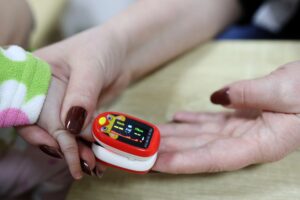
For patients and families managing respiratory needs at home, a pulse oximeter can become a regular part of the care routine. Knowing how to place the sensor, read the display, and recognize when a reading may need to be checked again can help make the equipment feel more familiar.
A pulse oximeter measures oxygen saturation, often shown as SpO2, along with pulse rate. These readings should always be understood within the care plan and guidance provided by the clinical care team.
Start With Correct Sensor Placement
A useful reading begins with proper sensor placement. The sensor should be positioned according to the instructions provided for the specific device and sensor being used.
Movement, poor circulation, incorrect placement, or a sensor that is not connected properly can affect the reading shown on the monitor. Taking a moment to check the sensor and make sure it is positioned correctly can help when a reading appears unusual or inconsistent.
Patients and caregivers should follow the equipment instructions they were given and avoid changing the prescribed monitoring routine without guidance from the clinical care team.
Give the Monitor Time to Read
After the sensor is placed, the pulse oximeter may need a moment to display a stable reading. Staying as still as possible can help the monitor collect a clearer signal.
Once the reading appears, patients and caregivers should look at the oxygen saturation and pulse rate according to the parameters provided in the care plan. The appropriate range can vary from person to person, so it is important to follow the guidance established for the individual patient.
Get Familiar With Your Specific Device
Pulse oximeters may have different screens, controls, alarms, and charging or power needs, so becoming familiar with the device used at home is an important part of the routine.
The Masimo Rad 8 and Masimo Rad G are examples of pulse oximeters that may be used as part of prescribed respiratory monitoring. Patients and caregivers should understand how to connect the sensor, read the display, manage power needs, and respond to equipment alerts based on the instructions they have received.
Knowing where to find this information before a question comes up can make the equipment easier to manage day to day.
Know What Can Affect a Reading
Pulse oximeter readings can sometimes change because of movement, sensor placement, circulation, or a problem with the sensor connection.
If a reading does not look right, patients and caregivers can start by checking the sensor placement and making sure the equipment is connected as instructed. If the reading continues to fall outside the parameters provided in the care plan, follow the response instructions given by the clinical care team.
A pulse oximeter provides important information, but the number on the screen should always be considered alongside the care plan and the guidance provided for that patient.
Build Confidence With the Routine
Using a pulse oximeter at home can feel more manageable with practice and a clear understanding of what to look for. Knowing how to place the sensor, allow the monitor to collect a reading, and respond to equipment alerts can help patients and caregivers feel more comfortable with the routine.
Wave Healthcare supports pediatric patients and families with respiratory equipment education and ongoing guidance, while Sail Healthcare supports adult patients and caregivers with respiratory care at home.
Patients and families should always follow their prescribed care plan and contact their clinical care team with questions about oxygen levels, symptoms, or changes in condition.