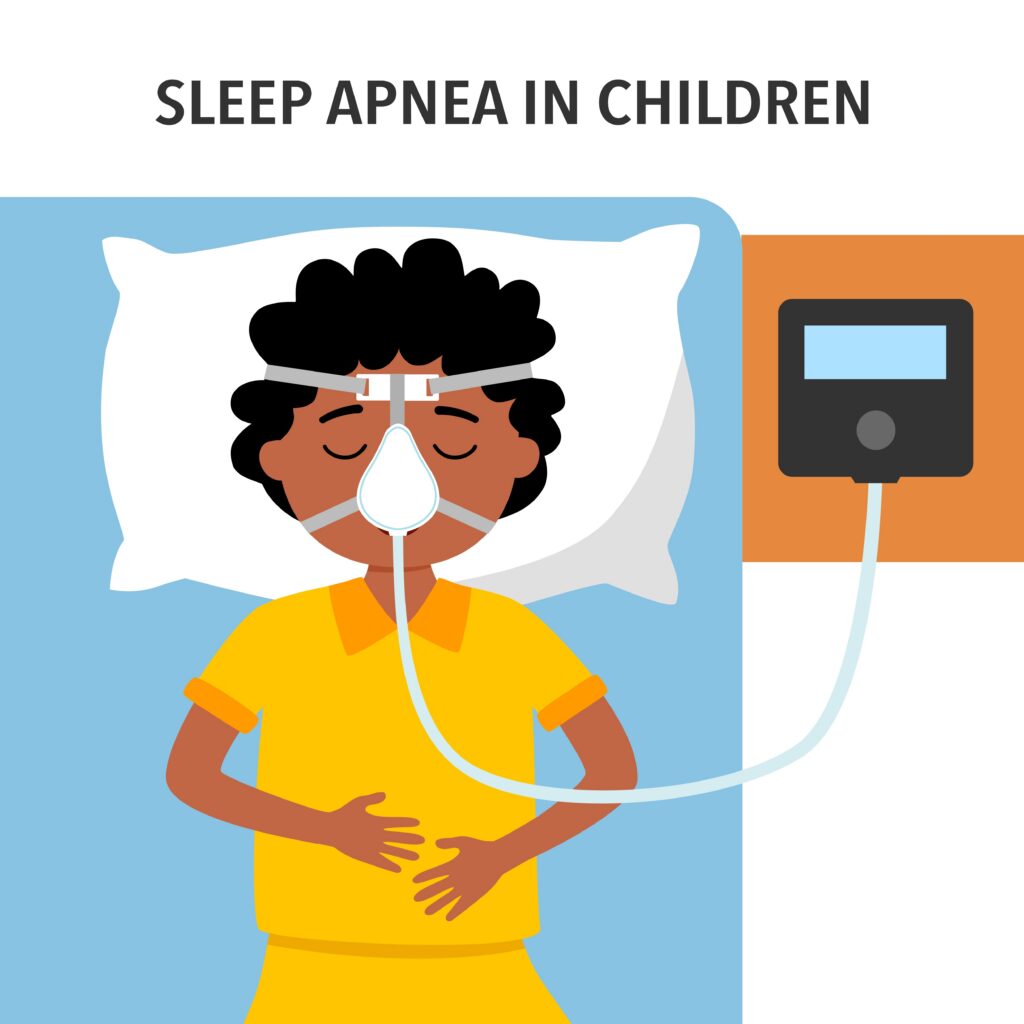
Sleep is meant to restore the body. But for children living with sleep apnea, nighttime can quietly become a period of interrupted breathing, disrupted rest, and added strain on the heart and lungs.
Sleep apnea education helps families and patients understand what is happening during sleep, why it matters, and how proper treatment can improve long-term health. With the right care plan, sleep apnea is highly manageable and quality of life can improve significantly.
What Is Sleep Apnea?
Sleep apnea occurs when breathing repeatedly pauses or becomes shallow during sleep. These interruptions may last seconds at a time and can happen dozens or even hundreds of times each night.
There are three primary types:
| Type | What Happens | Who It Affects |
| Obstructive Sleep Apnea (OSA) | Airway collapses or becomes blocked during sleep | Most common in adults, also seen in children |
| Central Sleep Apnea (CSA) | Brain does not consistently signal breathing muscles | More common in patients with neurological or cardiac conditions |
| Complex Sleep Apnea | Combination of obstructive and central patterns | Identified during sleep study evaluation |
While adults are more frequently diagnosed, children can also experience sleep apnea, especially those with neuromuscular conditions, craniofacial differences, congenital heart defects, or obesity.
Why Sleep Apnea Education Matters
Sleep apnea affects more than sleep. When left untreated, it can influence overall respiratory and cardiovascular health.
Common impacts include:
- Daytime fatigue or irritability
- Difficulty concentrating
- Morning headaches
- Behavioral changes in children
- Increased strain on the heart and lungs
Education helps families recognize that disrupted sleep is not just “restlessness.” It may be a respiratory issue that deserves evaluation and support.
Recognizing the Signs
Symptoms vary by age, but some patterns are consistent.
In children, sleep apnea may present as loud snoring, pauses in breathing, restless sleep, or unexpected daytime behavior changes.
If symptoms are present, a physician may recommend a sleep study to assess nighttime breathing patterns.
Treatment Options at a Glance
Treatment depends on the type and severity of sleep apnea.
| Treatment | Purpose |
| CPAP therapy | Keeps airway open using steady air pressure |
| BiPAP therapy | Provides different pressures for inhale and exhale |
| Supplemental oxygen | Supports oxygen levels in select cases |
| Weight management | May reduce airway obstruction |
| Surgical evaluation | Considered in certain pediatric cases |
Positive airway pressure therapy remains one of the most effective treatments for moderate to severe sleep apnea. When used consistently, it can significantly improve sleep quality and long-term respiratory stability.
The Adjustment Period Is Normal
Starting CPAP or BiPAP therapy can feel like a big step, especially for children . It is important to remember:
- Mask comfort takes time to adjust
- Consistency improves tolerance
- Questions and troubleshooting are part of the process
- Follow-up care improves long-term success
Confidence builds with repetition, reassurance, and accessible clinical support.
Sleep Apnea and Overall Respiratory Health
Sleep apnea does not exist in isolation. For individuals managing chronic respiratory disease, neuromuscular conditions, or congenital heart differences, stable nighttime ventilation plays an important role in overall health.
When breathing is supported overnight, patients often experience:
- Improved oxygen stability
- Reduced cardiovascular strain
- Better daytime energy
- More consistent respiratory status
Quality sleep supports quality breathing.
Building a Plan That Works at Home
Successful management requires more than equipment. It requires clear education, proper setup, and ongoing support.
At Wave, we provide pediatric patients with home respiratory equipment, CPAP and BiPAP support, hands-on caregiver education, and continued clinical availability. As a respiratory-focused DME provider, our role is to ensure therapy is delivered correctly, understood clearly, and supported consistently at home.
Sleep apnea is manageable. With the right plan in place, better breathing at night leads to stronger days ahead.